Monday, October 31, 2016

Scoring update! Humans: Five Bears: 0

One can’t live on Bear Lake without eventually writing a bit about bears. As I sit watching several swans feeding in front of the house reading about bear problems in my town, this seems like the right time. October has been bear month here on this side of the Kenai Peninsula. Last week a friend and teaching colleague Ron Hemstock was mauled by a bear at the Seward Airport, (Read more)and a few days before that several bears were dispatched by home owners who felt the need to protect their property. (read more)  Ronn's event was rare moment when man and bear collide in unexpected places,  Ronn spends lots of time on trails and mountains sides where one expects bear encounters, but he was attacked in the city limits. A tragic fact of life in bear country.  

It’s important to call things as they are. So far this month, depending whose counting, the score is humans: five, bears: zero. That’s right, we got them outnumbered, and we are killing them faster than they are us.


We live in bear country, I knew it growing up, I knew it when I built my first house on Lake Drive when there were more bears in Questa Woods than people. I raised my kids with bear awareness
and adapted my behavior accordingly.  Even with all that, what happened to Ronn could happen to me.
I knew I was in bear country when I bought this property on Bear Lake and had to honk my horn each morning when I arrived at the job site so I wouldn’t surprise a bruin fishing on my lakeshore. That summer I went several weeks when I saw bears every day. That is the reality of life in places where bears live. We modify our behavior because we know it’s hard for the bears to modify theirs. The alternative is to kill all the bears. Then we end up like California, where about the only place to see a grizzly is on their flag.

Most people who live on the edge of wildland know that living in peace with the animals require some behaviors that keep us all on safe. The better job we do the fewer conflicts we will have. When we moved to Bear Lake from a mile away on Lake Drive, I agreed to give up keeping chickens, Madelyn saw them as bear and eagle bait, so after several years I agreed. That was enough. We keep garbage in the bear-proof cans, and don’t leave birds seed and other attractant around the house. Bears walk through the yard on the way to the lake but they only stick around when we make a mistake. Last spring I left dog food on the porch and the next morning, opened my door to a bear having breakfast. He made three more visit that week before he figured out that was a one night stand. These are the kinds of mistakes that bring bears to our houses and get them shot. 

People who are distressed about bears in their neighborhoods need to look around and try to figure out what’s bringing them to backyards looking for dinner. Garbage is the big one. It’s not hard to secure trash so bears can’t get it.  Another culprit is free running chickens. I don’t think it’s coincidence that chicken-eating bears are common in neighborhoods where people let their chickens run free without coup or pen. The easy access to this prey eventually contributed to bears tearing onto secure chicken coups. If people don’t lockup their small livestock, they’re creating the behavior we don’t want. I kept chickens on Lake Drive (now Stoney Creek) for twenty-five years and had one bear incident in all that time, and that incident was a bear killing ducks I had running loose.    

Am I saying we shouldn’t shoot bears?   No, I’m saying we should do what we can so we don’t have to.  Obviously we will encounter problem bears who become backyards pests and a danger to us all, but most of our bears are not that type.  Not every bear that walks down the road or crosses your yard is a problem. They are part of what most of us enjoy about living here where bears, moose, otter, coyotes, swans, and even the occasional wolf make our lives richer by sharing the this valley with us. If you don’t like these animals in your backyard, I suggest you’re in the wrong place. 


Thursday, October 20, 2016

A Fall So Nice We Could Call It Autumn

On the third Thursday of October, the temperature hit fifty degrees here at the lake and we enjoyed another sunny late fall day -- a rare thing indeed. The lake is alive with waterfowl and lies flat without wind to ruffle the surface. The shore vegetation is a brown fringe beneath the deep green of the spruce forest that surrounds us here. The mountains background is snow whitened almost down to tree line.  

Without the typical dark, wet September and October, we have been able to embrace fall.  Embracing fall is one of the last things that we usually do.  Most years we go into October wishing we were somewhere else.  Weeks of rain and even shortening days can make even this beautiful place bleak and depressing. Not this year. These last couple of warm years have delivered lousy winters that are barely cold enough to call them winter, but we got some nice fall weather in the deal.  The wildlife seems especially active as well.

Yesterday, I watched an eagle harvest a muskrat off the shore in front of the house, and today twenty swans rafted up in the north end of the lake.  Oh shore, the brown bears are roaming the neighborhood like Ma Barker and her kids. A sow and three cubs are raiding chicken coops and garbage cans in about a three mile radius. This won't end well for the bears I fear.

Closer to home, the squirrels have been harvesting spruce cones in the yard like it's going to be a hard winter. I had to send a couple to see God when they started caching their booty in the attic of the sauna. An attic of a sauna filled with dry cones is a recipe for disaster, so I cleaned out the attic and made it squirrel proof —fingers crossed. Two days later the loft of my woodshed was loaded with cones. Luckily, my ten-year old friend, Noah climbed up and helped me clean those out. The squirrels had filled ski boots with cones even stuffing them up in the toes. Now I have a couple bushels of fire starters drying in the garage.
We've had one snowfall, and I helped Sawyer build the season's first snowman. Since then the wind and sun disappeared the our sculpture in a process called ablation (Madelyn gives me all those big science words) and only the mountains held their white blankets. That's all suppose to end in the next few days and we can probably expect the typical Halloween snowfall as winter final gets here in November, the month of cold and wind. It was good while it lasted.


Tuesday, October 11, 2016

On the Road, Where the Good Times Roll


Part of being an author is working at blatant self-promotion.  From the first time a writer submits a piece to a publisher to selling individual copies at a book fair, one has to be a seller, not my strong suit.  Part of marketing Secondhand Summer has been appearing in libraries for readings, selling books at fairs and bazaars, as well as making visits to schools.  This was a good match with Alaska Book Week 2016.

This week I did a bit of each, including visits to three libraries and three schools from Anchorage to Homer.  Fall is a great time to be driving the Peninsula with less traffic, dramatic leaf colors, and a good chance to have a bull moose cross your path — literally.  The chance of slick roads is low and the fall sunsets and sunrises on the Kenai are a dramatic light show.  Couple that with great meals in the Ninilchik with sister Amy and you have the makings of a pretty good road trip.

Of all my different events last week, I found the time at the schools the most satisfying.   Thanks to teacher, Mike Gustkey, my visit to Kenai Middle School was well organized and comprehensive. Up to three classes at time crowded into the library, and wrote energetically to a prepared prompt.  A teacher of writing, I know the challenge of getting students to engage in writing tasks.  Yet, these students hopped right to it and wrote energetically.  Many were eager to share their writings with the group.   It this is not an accident.  This is result of teachers working with student regularly to improve their writing and boost their writing confidence.  Thanks Kenai Middle School!
During my trips Homer Middle and Soldotna High, I found similar groups of teens who where friendly and polite as I shared my book with them and told my story of life in the last century on the Kenai.  It’s easy to forget how different the world of today’s children from the Alaska I grew up in.  Sure, we have the obvious impact of cell phone and computer technology in our lives, but more significant to me was change from a remote homestead lifestyle here to a rural or suburban life with lots of paved road, public utilities, and economic networks.   These kids don’t see themselves as backwoods sourdoughs, who have to hunt, fish and farm for a living.  Their world is little different from their counterparts in Anchorage, Seattle, or California.  That being said, there is an obvious appreciation by many for the rich environment where they live.

Teachers Bonnie Jason (Homer Middle) and Nicole Hewitt (SoHi) are educators who work hard each day to make students safe and help them learn.   There classes make me proud to be an educator, and I am honored that they think I have something to add to their teaching. 


It’s great to be home this week looking over Bear Lake as I write, but we all know that being away is what makes home so special.  That is true even when I’ve been visiting new friends and old the beautiful Kenai Peninsula. 


Sunday, October 2, 2016

Government Hill, A Place Apart

In my novel, Secondhand Summer, I place most of the action on Government Hill, a community in Northern Anchorage across Ship Creek from downtown.  I choose this location because it has a distinct character created by it's isolation from the rest of the city and because most of the events that inspired the book took place there.
Sam Barger's Caribou Club

My family moved to Government Hill in 1965 after my dad died, just like in the novel.  We didn't have much money and the apartment buildings on the east end of Hollywood boulevard were cheap and available.  This was also a short commute for my mom who worked at the Anchorage Westward Hotel, which is now the Hilton.
Another structure from Secondhand Summer
Look at Government Hill on google maps and it's pretty obvious that this is a unique neighborhood.  Cutoff from downtown on one side by the port and railroad yards along Ship Creek— guess what we used to call it— and the Air Force base to the North, this tiny wedge of real estate would develop a character all it's own.  When I lived there, it was a strange mix of feeling remote from the rest of town, but crowded apartments and traffic to the Air Force base made it feeling busy and crowded, very inner-city.  The were single family houses here too, mostly small bungalows in clusters along the West end of the community, but also a few big house that looked like they started out as homesteads.  At the top of the hill where Loop Road from downtown enters the community, was and is a cluster of small businesses.  When I lived there it included a drugstore, a small grocery, a burger joint, and a slot car racing venue.  Does anyone remember that fad?
Scene of the Comic book Caper

Slot cars were small electric cars that came in sizes not much bigger than today's Matchbox cars to cars then inches long.  The cars ran on tracks that streamed electricity and gave them power.  The racing loops would have several tracks so cars could race.  Guys would bring their own cars or use the ones at the shop and have races.  Most of the time we didn't have money to race but we would hang around and watch.

I have often wondered how Government Hill came to be.  Why didn't the Air Force take that area too the government formed the base.  I'm guessing that the community was well established when the base was built during World War II.   Wikipedia has good description of how it all came to be.  (wiki/Government_Hill,_Anchorage) It seems the Alaska Engineering Commission had built some homes there and created a community that was preserved when the Air Force took over the extensive farmland to the north.  As in 1965, the modern Government Hill is a distinct and somewhat isolated community with a proud sense of Identity, so it has a  presence on Facebook and active groups fighting to preserve the integrity of the area.

The New Government Hill 2016
I drove through Government Hill recently  and was glad to see that the apartment building I lived in was gone, replaced with attractive homes and condos with a view of downtown.  The "Caribou Club" is still there and so is the the strip mall where Sam and his partners stole the comic books.  There is still a feeling of being close to Anchorage, but not in it though the community seems better off than when Sam and his partners roamed the streets.  I saw boys there on bikes that could have been Sam and Billy.  Some things never change for there will always be restless boys trying to grow up.


Wednesday, September 21, 2016

I Know my Cars, So What.


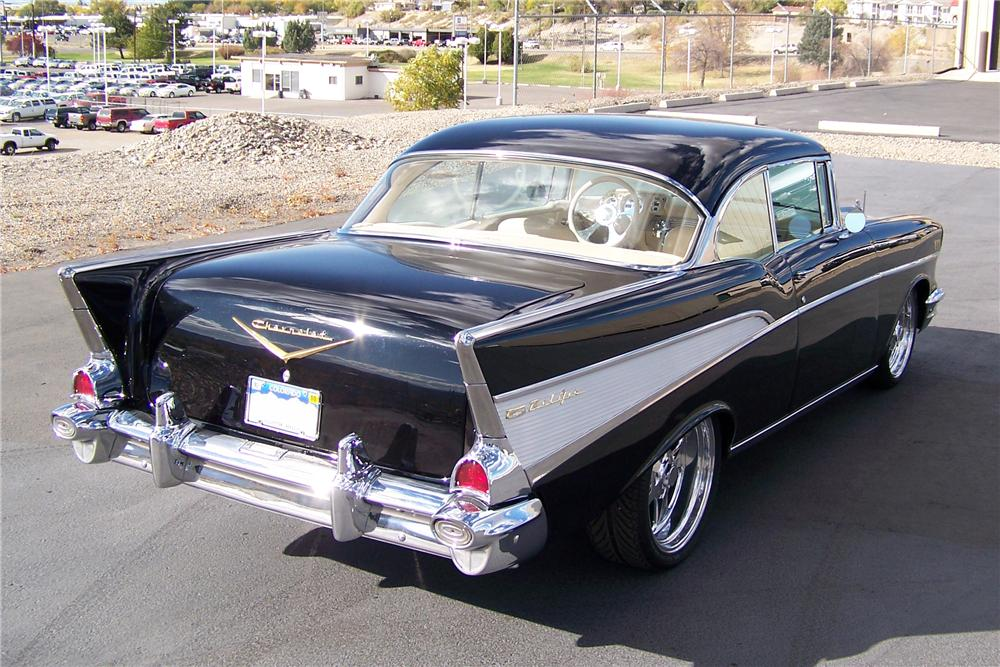
On Labor Day weekend, my wife and I were driving across the Kenai Peninsula, and we met several vintage cars on their way to Eddy's Auto Car Show that is held in our Seward Neighborhood each Labor Day.   I told Madelyn the make and year of most of the vintage cars we met since most of them were familiar and easily identified.  “That was a fifty-seven Chevy.”  “Look, that’s either a 1950 or ‘51 Ford.”
            “I can’t believe you know that,” she said, though we’d been there before.  She used to think I was just making things up when I called out the make and year of an older car, but somewhere along the line she realized that I was a true man of the sixties and I knew my vehicles.  I grew learning to recognize and name cars of the fifties and sixties.  Like the boys in Secondhand Summer, I watched with cars with an almost religious fascination, and as teenager there were always Motor Trend and Hot Rod magazines around the house.   
            Long before we could drive, boys like me and my brothers, would be educating ourselves about cars, preparing for that special day when we got a driver’s license for the drivers license was the true measure of a person’s movement from childhood.  You might be official a teenager at the thirteen, but we all knew that until you had that license, you were just a kid.   And, in fact, driving was such an alluring thing that some of us were driving independently long before we were sixteen. 
            Part of growing up was also planning and saving to buy a car.  Having a license was one thing; having a car of my own was quite another.   And having a car meant having a job pay for it and those things all worked together to building a mobile, independent population. 
From Wikipedia: a brodie knob, or knuclebuster
            I had three older brothers to watch going through this process and I watched as our Dad taught them the mechanics.  My brothers emulated Robert Mitchum in Thunder Road, an action movie about fast driving moonshiners in fifties muscle cars, a forerunner of Fast and Furious.   When he was in high school, Tom had a fifty-one Ford sedan that he seemed to spend more time working on than driving.    Mike later had a fifty-seven Ford two-door hardtop that he souped up to be faster than it was safe.  In a place where the nearest pavement was forty miles away, cars driven fast took a beating and some times didn’t take the corners.  There were lots of wrecks. 
            When my brothers got older they graduated to the sixties muscle cars, and just like Sam Barger’s brother Joe, my brother Tom had one of the first Mustangs in Anchorage, that he loved to race.  
Our last rental car, a VELOSTER!
          I never caught the car bug as bad as as my brothers had it, but I did and still do like to admire and critique the cars of that time.  During college, Madelyn and I used to cruise, and I mean Cruise, between Idaho and southern California in a 1966 Oldsmobile 88.  Two-door hardtop, massive engine seats the size of couches, and a trunk the size of a pickup bed.  What a ride.  Since the seventies, cars have become more and more similar in appearance and there are more brands on the road.  Most cars pass me on the road unrecognized and unremarked, but the cars from the decades of my youth are monuments of another time.  I think they represent too, a lifestyle and attitude for some of us that shaped our character.  Even in the lasted areodynamic, high-tech ride,  some ways we are still mobile, independent drivers with one hand on the brodie knob and a foot on the gas.


Tuesday, August 30, 2016

My New Project Chapter Three: It's always more Work than Expected

Sitting in my driveway is a shiny little humpback hobbit hole of a camp trailer.   Who would have guessed a month ago that by the end of August I would have transformed a rolling heartbreak into a totally functional mobile bedroom.  Not me.    With a nearly deranged level of task commitment, I manage to salvage something my wife called, one winter past redemption.  Once I had cut and installed new sides made of 3/4 inch plywood, I figured I had things licked.  Ha.  The hatch was to rotten to save or even use as a pattern.  I had to come up with a curved pattern for the shape of this trunk lid and plan a design that would be strong but lighter than the old one.

I made the ribs of 3/4 inch plywood scraps left from creating the sides and I was even able to use the curved cut.  My jigsaw died while cutting the the sides, so I had to turn to my cordless reciprocating saw to make the several cuts needed to make four plywood ribs.   I used stock 2x2 fir for the crosspieces on the lid then added a layer of hardboard and then riveted the aluminum skin back in place.  I was surprised that the hatch fit as well as it did though it was far from perfect.  It sits a little crooked, but it fits and should keep out the rain.  The whole project is more utilitarian than fancy.


 I managed to layer several coats of Spar Urethane over the epoxy resin I treated the plywood with and waited days for it to cure in our cool wet weather.  Most of the aluminum trim is being reused, backup with silicone.  The cutouts for the doors were used to make new doors, though only one was installed.    

Right now the camper looks a little cockeyed since one door has been replaced and one door is original.  It too will get replaced but not in the frenzy of August.   

A month ago, I wrote about experiencing a different kind of August, in fact that's what I called the blog post.  I was anticipating an August when I would not be looking forward to and starting school in some form or another.  I wondered what would I do.  This is it!  Part of it.  No it's not finished and no, it not showroom quality but as my brother used to say, "going by on the road at sixty miles an hour, who's going to notice?"


Monday, August 22, 2016

My new Project: Chapter Two -- It's Probably Worse than you Thought

I wasn't far into this adventure before I realized that it might have been easier to start from scratch.  But, In for a penny in for a pound, so we carry on.  The plywood sides of the teardrop were rotten so those had to be removed and i figured I could do that without removing the roof.  Good idea but probably more work than it was worth because I had to prop up the roof and remove the aluminum skin.  that showed a lot of rot in the hardboard inner skin so most of that had to go too.


The partitions had to be removed and added to the pile of rotten things to be replaced.  Soon, I realized that the oak flooring had absorbed water, swelled, and was adding weight to the trailer.  It still looked nice but it wouldn't show under the mattress any way so it had to go too.  Suddenly I had more trash and less trailer.


The sides were just barely stable enough to be a pattern for the new 3/4 inch plywood sides.  Then those sides were patterns for the hardboard lining.  These were glue together and the inside painted.   Luckily I had the warm dry garage to do that while I dismantled the trailer in the boat shed.  Great activity for a rainy August.  The side of the trailer also received strips of 1x1 fir to attached the partitions and shelves  (When completed the trailer will have plywood bulkheads separating the galley trunk and the bunk).

I was excited that the fiberglass fenders were in good shape, but the taillights would need replacing.  The ceiling fan, I tested and found it operable.  I then confronted the reality that the rear hatch was to rotten to save, so I peeled off the aluminum skin and discarded the waterlogged and rotten trunk lid frame and puzzled on how to build a new, lighter one.

The exciting part was that I was reaching the point of putting things together rather than taking them apart!   Could it be?

After lots of cleaning and scrapping and removing screws nuts and staples, I was able to apply a layer of epoxy resin to what was left of the trailer wood structure and begin to do the same to the new plywood parts.  I figured the best way to prevent the rot that got the trailer the first time is seal the plywood with epoxy resin like I was building a boat.  This is when damp, cool weather was not my friend.  The resin is a slow cure during a soggy August.
In spite of the weather, one day I attached the new sides of the trailer connected the ribs that supported the roof and the reborn trailer began to show it's new life.


The hatch was a different story!


Stay Tuned For More!