Sunday, February 5, 2023

Sunday Dinner from the Past

 Sometimes I get a hankering for a good bowl of pinto beans cooked up with ham hocks. We ate a lot of beans when I was a kid and unlike some of the meals that crossed our table, like liver and onions, I still enjoy beans today. When beans are the main course at the supper table they can't just be a plan pot of beans. At our house, the pintos were simmered with a ham hock, or a ham bone, or if one of those weren't around then mom would use the bacon rind. We bought bacon by the slab, the whole side of bacon, unsliced. A slab of bacon still has the rind on which is actually not rind at all but skin. That skin is coated in fat and has all that rich brine and smoke treatment that bacon has. Throw that bacon rind into a pot of pintos with some onion, salt, and pepper, let it simmer for two or three hours, and you've got yourself a tasty meal. The rind gets tender and you don't even miss those tender chunks of ham that come with a hock. 

I was lucky this week and found ham hocks at the store when I was having my bean craving or maybe I got a craving because I saw the ham hocks. Either way, they came home with me. It used to be that ham hocks were dirt cheap, and "living high on the hog" used to be a literal concept. If you had money you could eat pork loin or pork chops, even a big shoulder roast, Farther down the hog was the ham, and farther down yet (almost to the foot) was the hock. Anyway, that smoky ham hock is chock full of gristle, fat, and flavor, just what one needs to turn a sack of pinto beans into a fine meal. No Gucci seasonings, just salt, pepper, and a touch of clove if you want to be fancy. We always ate our beans with fresh hot cornbread and --don't cringe-- a big dollop of cottage cheese plopped on top of that steaming bowl of beans and maybe some raw onion. 

Mom always had to make an extra pan of cornbread because after the bean pot was empty it was time for dessert. Dad was in charge of dessert and it was the one time mom let us act like hillbillies. Following Dad's lead we would crumble cornbread into our milk glass, top it with a teaspoon of sugar, then pour milk over it. If he didn't have pie, Dad would always settle for cornbread and milk. 

Tonight we had a fine dinner of ham hocks and beans with all the trimmings and even though the ham hock wasn't very meaty the flavor was there. I overate and found myself transported back to my boyhood. That's what the family recipes do, they trigger the memories of meals from the past and all those times
a family sat around the table together. 

Thursday, February 2, 2023

Knives OUT! Pocket Knives That Is.


When I was in fourth grade my mom, in a way very unlike her, succumbed to my begging and bought me a pair of lace-up leather boots that came with a pocket knife in a scabbard on the side of one boot. I thought I was the richest kid in the world, and perhaps a dangerous pirate armed and ready for anything. I wore these boots proudly to school every day and showed off the knife at recess. I’m sure the other boys were jealous. Of course, this was in the early sixties when no one would look twice at a kid carrying a knife at school. In reality, this wasn’t much of a knife; it was made of cheap steel and didn’t hold an edge. I probably broke it or lost it after a few months, but this was my first knife and got me started with pocket knives. 

This cheap knife in a boot was probably my first pocket knife and it didn’t last long, but it got me on the road to being the pocket knife-toting man that I am today. In fact, I can’t believe that adult humans actually go around quite comfortably without a knife in their pocket. I use my knife at least once a day, whether it’s opening a package from eBay or cleaning my fingernails. In fact, I feel incomplete when I walk away from the house without one. 

After a few months, I had replaced that novelty knife with a good Barlow knife, one of the most popular knives before the Swiss Army knife came on the scene. The Barlow was a sturdy knife with a carbon steel blade and a grip that fit the hand well.

I’ve had a variety —maybe dozens— of knives in my time. Some I broke, most I lost, and others I passed on in favor of a new shiny one. When I was a Boy Scout I found a giant folding knife the size of my fist that had a dozen different tools

including a spoon. Being a guy that’s always ready to eat, a folding knife with a spoon attached seemed just the thing. Of course, the blade was cheap and flimsy and some of the tools were already broken, so this gem didn’t stay in my inventory long. Plus it was far too big to carry in the pocket of my jeans.

When I was in junior high I had a part-time job which meant I had money burning a hole in my pocket. Many a payday I would be down in Fourth Avenue prowling the glass cases full of knives. They had everything from beefy, stag-handled Bowie knives to little knives for trimming the tips off cigars. I my buddy liked looking at the Switchblades 

For a while, I had a folding Buck knife, again a knife too big for the pocket, that I carried in a leather scabbard on my belt.  I can’t say I lost that knife because I know right where it is, or was. I left it stuck in a log at a campsite on the Moose River, and I was miles down the river when I realized it. I’m sure the next people that camped there were glad to see it came with a knife big enough to split kindle with.  Most of my lost knives are truly lost, dropped overboard, abandoned on the top of a car to sail off into the ditch along the highway, or lain down and walked away from. All these are remembered too late to recover. The real joy is the kind I had the other day when I put on my Woolrich bibs and found a Swiss Army Bantam I’d given up for lost three months ago. There it was in the left-hand front pocket where it was supposed to be, right where I left it. 

When I talk about pocket knives I mean a small knife that will actually fit a pants pocket comfortably without banging my hip, pulling my pants down, or taking 5 minutes to fish out of said pocket. They make folding knives as long as my forearm, and I have a folding Swiss Army Camper that measures a good four and a half inches and is close to an inch thick. Now, I’m no Esquire magazine pants model but who wants a tool that size in their pocket. Not me. In fact, I like a slim short knife that fits nicely in the hand or pocket, but not something small as a pen knife — a penknife is a very small pocket knife often two inches long, that's named for its use in the days of quill pens when a writer had to be trimming the end of the feather pen. When I talk pocket knives I don’t include box cutters or utility knives like we all have laying around our garages and hobby rooms. These are handy tools in their place, but there is nothing like a pocket knife for general day-to-day, always on had usefulness. 

Currently, I carry a Swiss Army knife Bantam with only one knife blade and a combination screwdriver bottle opener. It has, of course, the Swiss Army toothpick and tweezers tucked in the handle. 

I tried for years to get my wife to carry a pocket knife as well but she usually doesn’t except on camping trips. Instead, I make sure there is a knife in each vehicle and daypack. Yea, I have that many pocket knives around. I’ve got a couple multitools around too, the traditional Leatherman-type plier/knife combination, but I don’t like to carry them, they’re bulky and the knives are usually not comfortable to use. I would just as soon have a good pocket knife and small pliers. Some folks carry these in holsters on their belts and do the same with the big pocket knives, but I don’t. I like to carry those bulky multitools or big Swiss Army knives in my pack. A few years ago my son got me a big Swiss Army Trekker that I carry in my truck and on my pack when I’m in the woods. It’s a beefy knife 

with a serrated blade, screwdrivers, a saw, and an awl. A handy toolkit for days in the woods. 

I’ve had a lot of Swiss Army knives in my time some with several blades and tools from the corkscrew to a saw blade. When I was teaching I used my knife all the time in my classroom, and my students got used to Mr. Walker whipping out his knife to sharpen a pencil, cut tape or tighten loose screws on a wobbly chair. That came to a screeching halt when the school district decided to ban knives on school campuses. Now there’s a rule that is almost impossible to enforce. Of course, my son who is a conscientious rule follower got caught in that milieu. He came down to my classroom one day at lunch, which he rarely did. Speaking in a low voice, he said, “Dad, I’m in big trouble.”

Of course, I was aghast. “What happened?”

I’ve got a knife and shotgun shells in the truck. I could get expelled.” I had to work hard not to laugh. He was not in a joking mood. This was no laughing matter to him. I had let him drive the family pickup truck to school, and that same day the powers at hand issued a reminder to the students about knives and other weapons being banned on campus EVEN IN VEHICLES. “Wow, Are the searching cars in the parking lot now?” I asked.

“Dad, this is serious.” 

I tried to reassure my law-abiding son that no one was going to rummage through our truck looking for weapons, so he just needed to leave things where they were. He wouldn’t have it, so I had to drive over to the student parking lot and empty the contraband into my car, so my son could have some peace of mind. Of course, this silly rule didn’t stop many of us who carried knives, both teachers and students; we just became more discreet. We kept our knives in our pockets for a few months, and then people turned their attention to other issues and most of life went back to normal.

One of the big hassles of a dedicated knife carrier is air travel. I loved it when I traveled to the bush on the small local air services. No TSA, nor baggage searches and my knife could stay in my pocket giving me comfort that if something happened I had a basic survival tool, my knife. But when I jumped on Alaska Air to head south Things get complicated. I hate to think how many pocket knives I have surrendered to TSA agents when they find the blade I left in my daypack. Usually, I remember and put my knife in my checked bag. In fact, sometimes it’s the only reason I check my luggage, so I can have my trusty pocket knife when I reach my destination. 

I read about a guy who got to the airport and forgot he had his Swiss Army knife in his pocket when he got in line for a security check. He got out of line and buried his knife in a planter outside the terminal. Upon his return, he recovered his knife from its secret stash. This has me wondering how many knives are stashed in little corners of America’s airports by guys like me who don’t want to lose our precious tools. 

When we traveled to Canada last year, my wife and I decided to travel light and because we had several different flight transfers we didn’t check our luggage. Since we had only a carry-on I couldn’t take a knife and pouting commenced. You can imagine how I whined about that, but I didn’t want to risk lost luggage either. “I’ll just pick one up at a second-hand store,” I said. When we landed and got our rental car we stopped at a grocery store for picnic supplies because we were going to be doing a lot of driving. After that, we stopped at the local Salvation Army store for our usual treasure hunting, and I asked searched all over that store for a knife, finding nothing. Finally, I asked at the cashier section and the lady said, “Oh we don’t sell knives here, Too much liability.” I found out that a man had attacked some people in Montreal or Toronto with a knife that week, and some people were being over-protective. I finally when to a hardware store and bought a pairing knife so we could at least have our picnic lunches. In a funny, not so funny, end to this story, on our return flight home we check our bags from Seattle to Anchorage since it was just one hop. It took a week to get our bags back and in the process ended up with someone else’s bag for a while. 

When I was traveling frequently, I started testing different knives that I could smuggle aboard a flight in my carry-on. I had a little knife that looked like a house key, and I got that through TSA several times before an astute agent snagged it. I tried the toolkit/knives combo shaped like credit cards and little multitools so small they’d fit inside your fist. I found little knives that hung on a key fob and weren’t even shaped like something you could cut with but they did have a sharp edge. Sometimes they when through without a hitch, but eventually, I lost them all. Now I’m thinking better find some good hiding places at the airport for the knife I forget to leave in the car. Or better yet maybe open a chain of contraband exchange stores in airports around the country. Drop your knife at the store in Anchorage and pick up a replacement when you land in Minneapolis. There’s a business opportunity for someone. 

I know it sounds materialistic to make so much a little tool, and yes, it’s easy to complain that objects in our lives don’t matter. Only people matter. But there are physical objects that give us pleasure and comfort, connect us with our past, and help us do the things we do. We humans are toolmakers, and sometimes those tools become part of our character, a talisman whose meaning extends beyond its basic function. I probably seem old-fashioned carrying a knife everywhere I go, but I also carry a Zippo lighter, and no, I don’t smoke. I figure if a person can cut stuff and make fire, he like our primitive forebears will be a leg up on facing most challenges that come along. 


Wednesday, February 16, 2022

Old Fashioned Milk Pie. Yes, Milk Pie

As promised much too long ago, here is another of Gramma Walker’s recipes. I’m putting the recipe right at the top of this blog because when I’m looking for a recipe I generally don’t feel like reading 1500 words about how busy Marsha’s Monday was or all the steps Joe Bob takes to set up his outdoor oven. I want the recipe straightforward and upfront, so here it is. 

Granny Runt’s Old Fashioned Milk Pie

  • 1  Cup granulated sugar
  • 1/4 Cup flour
  • 2  Cups homogenized milk 
  • 1 tsp vanilla

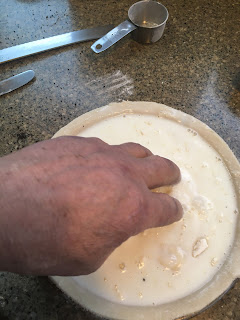
Put sugar and flour in 8" unbaked pie crust.   Stir with your fingers until well mixed.  Add milk (and vanilla) and stir. Sprinkle nutmeg over top. Bake at 375 for about 45  minutes. This may not be real thick. Skip to the bottom for my revised recipe.


My gramma’s recipe for milk pie was included in a collection of her recipes passed over to me by my cousins. I show the recipe as written except I inserted (and vanilla). I did this with good reason because vanilla wasn’t mentioned in the instructions, so I left it out and had to sprinkle it in after the pie had been in the oven for a while —- OOPS!

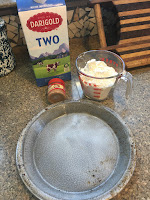
When I baked this for the first time, I used a store-bought pie shell because I’m lazy and don’t enjoy making pie crust. My mom was a master at pie crust and so is my sister — she is the star pie maker in Ninilchik, Alaska. The store-bought pie crusts bake up very nicely. I used an eight-inch, old enamelware pie plate probably much like Granny Runt would have used seventy years ago. 


In making this pie, I followed the instructions precisely with 2% milk, all-purpose flour, and white sugar. This seems like a variation on custard pie and I was tempted to drop in an egg but stayed true to the recipe. I even stirred the mixture with my fingers. However, I did hit one snag — a different one than forgetting the vanilla. When I added the milk, I found only room for one cup, and after I stirred the mixture I still could only sneak in an additional quarter cup. I’m guessing the milk amount is a guesstimate as pie pans come in different depths, and to be fair, I didn’t measure to confirm that my pan was an eight-inch pie pan. 

As I write the pie is filling the kitchen with that rich aroma of vanilla and nutmeg which holds great promise, and at thirty minutes I could see the edges of the milk filling were starting to thicken. I am baking in a convection oven so I reduced the temperature to 350 F, which seems to be working just fine. 

For the sake of comparison, I have looked on the interweb for other recipes for Old Fashioned Milk Pie and found several. They all seem about the same except some are Guucied up with half & half, cinnamon, and/or brown sugar. I did find that most of them referenced an undefined amount of milk. That was reassuring. 

At the end of 45 minutes, the pie seemed not quite ready so I left it in the oven for a bit longer. As the pie cooks it lifts and bubbles. I found one recipe that said the pie was done when the center bubbled up and the center fell back down to its original level.  That makes sense to me. I also plan to let the pie sit at room temp and cool before slicing. To keep my itchy fingers out of it, I’ll go outside and do some chores while it cools.

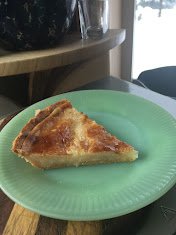
The pie came out firm and moist, tasty too. I even figured out the one cautionary note in the recipe, ‘it may not be real thick’. I thought that this meant the filling may come out running, but I think it meant the pie would be thin, as in shallow. And it isn’t very thick, only about a half-inch, but a tasty half-inch.


Each taste of this simple pie reminds me of its origin. A pie that could be made with only the basics found in even the poorest kitchen. Lard and flour for crust and thickening, milk and sugar, maybe some nutmeg or cinnamon. That's all you needed to make a fine desert. My grandparents grew up poor, but they didn’t live poor. They had the humor, work ethic, and traditions to make poverty a way of life for midwestern subsistence farmers. Try this fine simple pie and think of my Granny Runt when you eat it.  She had a style like no other. 


Granny Runt’s Old Fashioned Milk Pie 2022 version

  • 1  Cup          granulated sugar 
  • 1/4 Cup         flour
  • About 1.5 cup homogenized milk 
  • 1 tsp          vanilla
  • Options:      sub some brown sugar, cream, half & half, or cinnamon.
  1. Put sugar and flour in 8" unbaked pie crust. Stir with your fingers until well mixed.  
  2. Add vanilla and enough milk to fill pie pan and stir. 
  3. Sprinkle nutmeg over  top. 
  4. Bake at 375 (350 convection) for about 45 - 60 minutes until center bubbles up and falls back on itself. 
  5. This is definitely a pie you want a cookie sheet under as it bakes. This may not be real thick.  
  6. Let it cool before cutting and serving. 


Monday, December 13, 2021

Rice Pudding, Eating Dessert from Granny Runt


A while back I came across a bunch of recipes of Grandma Walker’s that my cousins had shared with me, and thought it would be fun to make some of the foods in the collection. Most of the recipes are desserts and of the simple egg-sugar-flour-milk variety common to cooks without money or access to fancy ingredients. Some were familiar like rice pudding and bread pudding; others like vinegar pie were not. 

My Grandma Walker, also known as Granny Goodwitch or Granny Runt was an upbeat little bundle of energy who everyone loved. She grew up poor and married Clarence Walker a poor sharecropper. They started married life with a dozen chickens and lease on a small farm. Her recipes reflect the kind of treats foods that people make with just the basics available on a small subsistence farm. Some recipes showed up on our homestead table, but others, like Milk Pie, are completely new to me. 


The first recipe I tried from this collection is rice pudding which is something Mom used to make and I always enjoyed. Who doesn’t like something sweet with sugar-cinnamon, and raisins? It’s been ages since I had it, but I could remember the sweet cinnamon raisin flavors and the creamy texture. A great winter dessert that probably can be made from things you have in your pantry.


                                                Rice Pudding

3 C cooked rice 

3 eggs

1 pint whole milk

1 C cooked raisins if desired 

1h C sugar

1 tsp salt, flavor with vanilla, nutmeg or cinnamon 


Beat eggs, add sugar and milk, mix.

Stir in rice, raisins, and seasoning, bake until set at 350 in a 2-quart casserole dish.


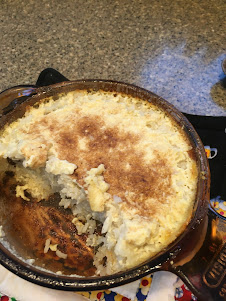
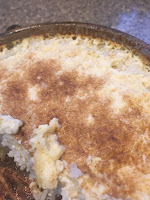
I followed the recipe exactly except that I figured I didn’t need to cook the raisins; I just poured hot water on them so they’d soften and swell. As with many of Granny’s recipes, the instructions are vague and a little trial and error might be needed to get the texture and taste you like. When I made this I found the rice a little dry, but I think that was because I let the rice get a little too dry when I cooked it. The cinnamon makes a nice toasty color on the top and the eggs make a custardy texture. This is good hot or cold and even makes a tasty breakfast. 

 Next up, Milk Pie!  

Sunday, October 31, 2021

Stories from the Kitchen Table


 One of the most powerful memory makers is food, and the meals of my family especially those homestead meals of my childhood are solid frames for the stories of my life. From cornbread and beans to fried chicken with mashed potatoes and gravy there is a story behind each meal and a meal behind each story. The reach of these stories was extended a while back when my cousins sent me several pages of Grandma Walker's recipes. Granny Goodwitch as she was affectionally called, had written down some of her old-time favorites and shared them with her granddaughters before she passed. These recipes, mostly deserts, harken back to a time when a lot of recipes were based on what was on hand. My grandparents were farmers in southern Ohio, and Gramma didn't have a lot varied of ingredients to draw from. I decided this winter to honor my grandma and mother and duplicate their recipes in my kitchen and share them with you. Some may seem familiar and others, not so much. We'll make slumgullion and milk-pie, devise our own recipe for moose track stew, and track down hard-to-find items like Kitchen Bouquet.

This week, Grandson Sawyer helped me make slumgullion, which I thought was a word my mom had made up, but it turns out this is an actual term for a skillet dinner of ground meat and macaroni, the precursor of Hamburger Helper. Slumgullion was a go-to meal for mom and busy weeknight dinners and she really liked it after she got an electric skillet (avocado green of course). I didn't have a recipe from mom and I'm sure it's one of those dishes that she usually threw together. A quick search of the internet and brought forth a plethora of slumgullion recipes with variety as wide as American taste buds. Sawyer and I settled on one that looked the most like what mom would have made, and it had the critical element of being a one-pot recipe. Yes, you cook the macaroni in the skillet. We didn't have moose meat, but we had a pound of ground bison which made a good choice, though budding chef, Sawyer, wanted more flavor in the meat. Our adaptation is below.


SLUMGULLION

INGREDIENTS

1 tbsp olive oil

Half cup diced onion

2 garlic cloves or minced /Granulated garlic

1 lb lean ground beef/Italian sausage

1/2 tsp italian seasoning

1/2 tsp oregano

1/8 tsp sea salt

1/8 tsp black pepper

14.5 oz can diced tomatoes

14.5 oz can water

8 oz elbow macaroni

grated parmesan or asiogo cheese for garnish

Brown meat, onion, and garlic. Add seasoning, tomato, macaroni and water. Cover cook, simmer until pasta is done. Stir occasionally and add water if needed. Feel free to add spinach, peas, or kale (that's the green in the photo).

This was a hit with Nana and the grandkids and it carried the flavors I remember from my teen years in Anchorage.  This recipe is also very adaptable. Here are some variations worth trying:

  • Use Italian sausage and/or flavored canned tomatoes
  • Make it chili mac by using taco seasoning and adding beans.
  • Add any variety of vegetables to make the dish healthier
Mom would also make this with bacon and tomato paste, two staples that were always around our pantry even when times were lean. This is one of the first dishes I learned to make when started getting involved in meal prep as a teen. Mom work and Peggy, David, and I had to pick up chores around the house, and I quickly learned that cooking was more fun than cleaning up. When I was younger and there were seven or eight of us at the dinner table, mom had to have recipes that really stretched her resources to fill all the hungry bellies. At the homestead, we bought macaroni in fifteen-pound boxes, tomato paste by the case and bacon by the full slab, with the skin on. That bacon rind shows up in later recipes. Stay tuned.  And while you wait, try making old-fashioned slumgullion for the hungry bodies at your table. 


Friday, August 6, 2021

A Few Cross Words about the Last Crossword

Big disappointment this month when I opened my morning paper and found a letter from the Anchorage Daily News stating that they will no longer be delivering hardcopy newspapers to the Kenai Peninsula. Bam, that’s a punch in the gut. After all these years no more newspapers in my driveway. 


This morning I walked out to the end of my driveway at Bear Lake and picked up my Anchorage newspaper for the last time. Yes, as of today the ADN will not be delivered to the Kenai Peninsula. I found it a bit ironic that I opened this last paper and saw their lead story was from Seward. Our gold medalist, Lydia Jacoby was at the top of the front page. At least that paper came to our driveways and people can save Lydia’s front-page picture. Not after today. 

ADN claims there are “circumstances beyond our control” forcing them to cease delivery on the Peninsula. Good grief, call it what it is, a business decision. No one told them they couldn’t deliver papers in Seward, Homer, Kenai. The roads aren’t closed. It’s just a business decision, which I guess I understand, but I’m still going to miss reading a hard-copy newspaper and working the New York Times crossword. 

Yeah, I’m even going to miss walking out the driveway on dark cold mornings to search for my paper in the snowbanks at the end of the drive. They didn’t offer the option of higher subscription rates. It’s just boom, they’re gone. And now people have nothing to start their fire with in the morning, nothing to crumble up and clean the glass door of the woodstove. The Seward Journal is a fine paper but it’s weekly, and there isn’t enough of it to do all the chores that newspapers do around our house: drop cloth, puppy training, tinder for your charcoal starter, packing paper, fun paper hats, and liner for pantry shelves. It’s going to take some adjustment. 

It’s not just the practical loss; I have a lot of angst mixed with this loss of paper delivery. When I was at my weakest this winter, I started my fight against cancer every morning by walking out the driveway for the paper. Somedays that was a long walk that took my breath away, and some days I didn’t feel like bundling up and tromping out through the snow, but I made it part of my treatment program. I got so I looked forward to walking that fifty yards to fetch the paper and coming back to the house for coffee, crossword, and first breakfast. 

Yeah, for fifteen-ninety-nine I can read the paper online, but really, it’s not the same, especially doing the crossword that way. And I can’t see paying them that kind of money for news I can find for free in other places. Yeah, I’ll miss some of their feature stories, and I’d have to print out the crossword somewhere else -- after I finish sulking -- but really I’m sad to see the end of a daily paper delivered to my driveway. I’m a pretty modern, techy guy but some things are hard to get used to, and this is one of them. 

On the bright side. Maybe I’ll get more writing done if I don’t have a crossword to solve every morning. 


Saturday, July 17, 2021

Biscuits, Sourdough, and Small Town Cookin'

 Like many people this year I spent some of my time in isolated self-quarantine in the kitchen trying my hand at baking. For as long as I can remember I have enjoyed cooking, and to my wife’s joy, I do most of the cooking at the Walker compound. This year I extended my repertoire to baking. Before now my baking interests were limited to cornbread and biscuits, the foundation of oven work in the Walker family. This year I got into sourdough big time and can finally turn out a good loaf that looks and tastes table-worthy. 
I have been intrigued by the ideas of sourdough biscuits, an attempt to marry my new interest to my family traditions. Online research turned up lots of recipes most of which were too involved for me to attempt. Biscuits are q quick bread, not just quick to cook but quick and easy to make whether the baker is bleary-eyed at six am or faced with extra company for dinner and no bread in the house. 

I was looking through one of those community cookbooks that we found at an estate sale and came across an interesting and simple, biscuit recipe. It seems every community big enough to have a name has produced a community cookbook, and they must be a staple around the United States. Travel the country and you’ll these little stapled or plastic-bound books with the favorite recipes of the town's most confident cooks, and the recipes usually have a regional flavor. And, because these are labors of love by amateur editors, they are fraught with typos, redundancies, and confusing instructions. Thrift stores, yard sales, and Aunt Martha are great sources for them if you are looking for interesting local recipes. Obviously, these recipes aren’t tested like the ones in the recipe book you paid thirty-nine ninety-five for, and sometimes they are confusing or incorrect. They also are full of vagaries like the biscuit recipe I found, “Bake until done.”
As I said, I was looking for a simple biscuit recipe that used my sourdough starter for flavor and leavening. This one had promise. Simple procedures and a short ingredient list.


Yes, I told myself, this is just what I’m looking for. The Instructions were simple too.
I had some starter brewing on the kitchen counter, so last night I decided to make a test batch of sourdough biscuits using this recipe. But I have to say, that looks like a hell of a lot of flour. My gut was telling me that even with the vagaries of sourdough starter this recipe couldn’t take more than two cups. I started with one cup of flour with more flour on standby, added the dry ingredients mix them, and then added a tablespoon of coconut oil since I didn’t have shortening. —I left shortening behind long ago. Butter or coconut oil is healthier and tastier. Olive or canola oil might work too. Then I added my sourdough starter and stirred. This made a nice firm dough that didn’t seem to need any more flour. I shaped eight small biscuits by hand and rolled them in oil as instructed. I baked them at 425 in my toaster oven which took about ten minutes. 
These raised well, turned golden brown and tasted great with a nice burst of sour flavor. 
I wouldn’t go to the trouble of rolling these in oil. In the future, I will oil my hands while shaping my biscuits and this will add enough oil for that crispy brown crust. 
Here’s my revised recipe for those of you who want to try it. I won’t go into the gastronomic and microbiological rabbit hole of sourdough starters you can find plenty of those elsewhere. 


                                            Quick and Simple Sourdough Biscuits


1 cup active sourdough starter

1-1.5 cup flour 

1 teaspoon each of baking soda, salt, & sugar

1 tablespoon of shortening

Cooking oil for coating

              1. Mix dry ingredients
              2. Add starter and mix into a firm dough
              3. Divide dough into eight equal parts and with Oil on your hands form eight, round biscuits (These could be cut with a biscuit cutter too I imagine and brushed with oil)
              4. Fit biscuits close together in a baking pan and press each down to about 1/2 inch tall. 
              5. Let rest on the counter for 30-40 minutes
              6. Bake at 425 until golden brown, about 9-10 minutes

These can be prepared overnight and the baking pan set in the fridge or somewhere else cool until morning to bake and serve hot at breakfast. 


So there you have it, a sourdough biscuit that is easy and tasty. Don’t be afraid to add a quarter cup of shredded cheese or other snappy flavors. I can imagine using this as a basis for some sourdough scones — more on that later. Keep an eye out for those community cookbooks; you just might find a culinary treasure.